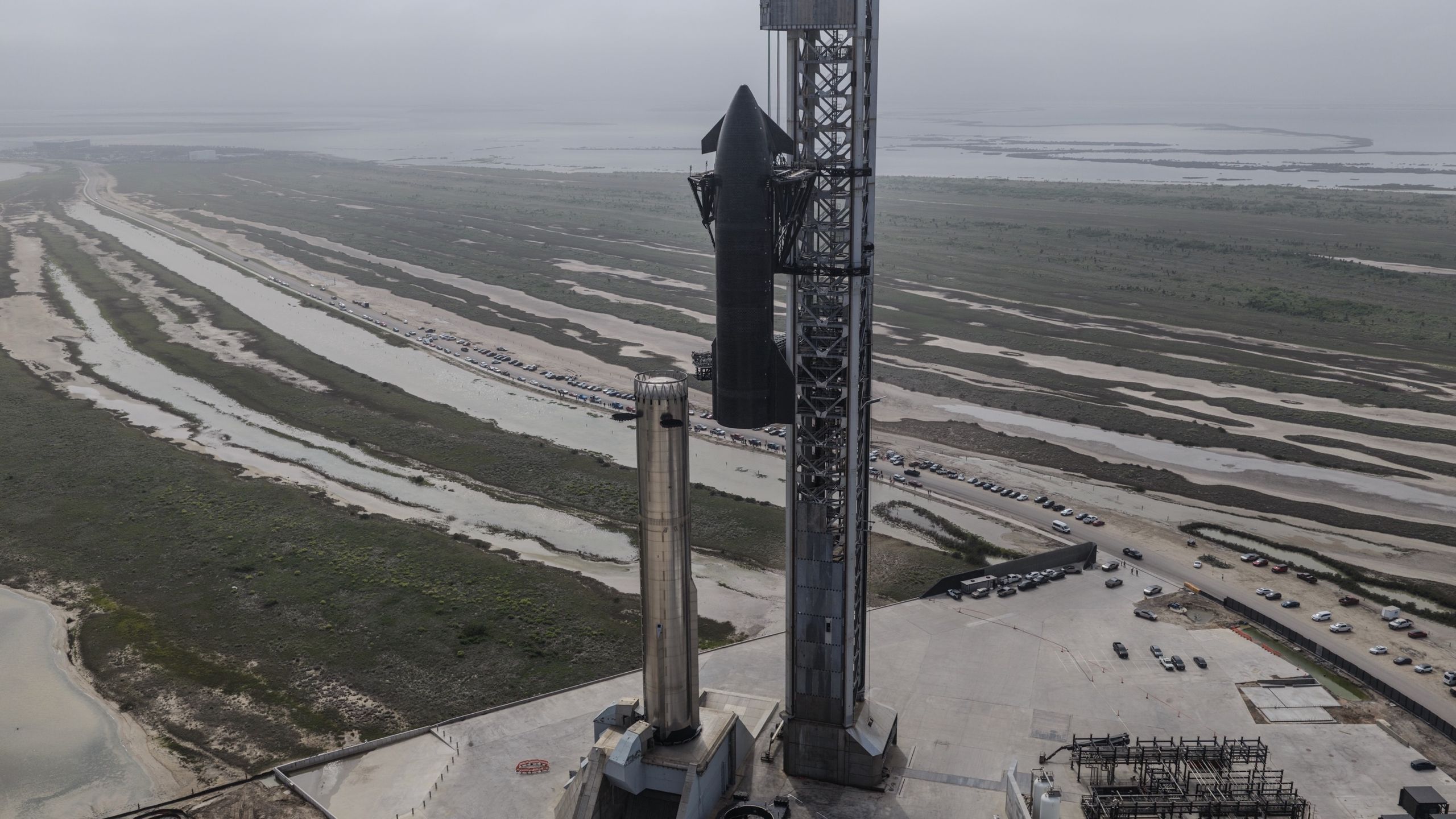
SpaceX Stacks Starship V3 Rocket, Completes Major Fueling Test Ahead of Debut Launch
The world watches with bated breath as SpaceX prepares to launch the next iteration of its Starship program. The recent stacking of the Starship V3 rocket at Starbase, Texas, and the completion of a major fueling test mark a pivotal moment in space exploration. This isn't just another rocket launch; it's a significant leap forward, paving the way for ambitious missions to the Moon, Mars, and beyond. This article delves into the key upgrades of Starship V3, what to expect on its inaugural flight, and the implications for the future of space travel.
Key Upgrades and Design Enhancements in Starship V3
SpaceX has been relentlessly iterating on its Starship design, and V3 represents a substantial evolution from its predecessors, V2 and V1. These improvements are not merely cosmetic; they are crucial for enhancing the rocket's performance, reliability, and reusability – the cornerstones of SpaceX's vision for sustainable space exploration.
Structural and Propulsion Overhauls
One of the most notable changes in Starship V3 is the structural redesign. The primary goal of these modifications is to reduce the rocket's dry mass, which directly translates to increased payload capacity. This is achieved through advanced materials and optimized structural layouts. Furthermore, the propulsion systems have undergone a significant overhaul. Both the Super Heavy booster and the Starship upper stage now incorporate the upgraded Raptor 3 engines. These engines boast improved performance characteristics, offering greater thrust and efficiency, which are critical for achieving orbital velocity and delivering payloads to their intended destinations. These Raptor 3 engines are a key factor in the SpaceX's Starship V3: A Giant Leap for Lunar Missions & Beyond that will make lunar missions possible.
Dimensions and Aerodynamic Refinements
The overall dimensions of the Starship V3 stack have also been tweaked. The full stack is approximately 1.5 meters (5 feet) taller than Version 2, reaching a total height of roughly 124 meters. This increase in size allows for greater propellant capacity and potentially larger payloads. In addition to the size, aerodynamic improvements have been implemented. The Super Heavy booster has seen a reduction in its grid fin count, from four to three. While this might seem counterintuitive, each of the remaining fins is 50 percent larger and significantly stronger. This enhancement is crucial for the "catch" operations at the launch tower, a key element of SpaceX's plan for rapid reusability. The larger fins provide greater control and stability during the booster's descent, allowing the launch tower's "chopstick" arms to capture and secure the vehicle.
Focus on Reusability and Operational Efficiency
The core of SpaceX's design philosophy is reusability. The ability to reuse both the Super Heavy booster and the Starship upper stage is essential for driving down the cost of space travel and making it more accessible. Starship V3 incorporates several features aimed at improving reusability. The aforementioned "catch" mechanism on the launch tower is a prime example. Furthermore, the design includes docking ports for in-space refueling, a critical capability for missions beyond low Earth orbit (LEO). This allows Starship to refuel in orbit, extending its range and enabling missions to the Moon, Mars, and beyond. The successful recovery of the Super Heavy booster in previous tests demonstrates the progress SpaceX has made in this area. While the ultimate goal is to recover both stages, recovering the Ship upper stage is a complex task. Depending on the success of the first V3 test flight, SpaceX may attempt such a recovery on subsequent flights.
What to Expect on the First Flight: A Suborbital Test
The inaugural flight of Starship V3 is planned as a suborbital launch. This means the rocket will not attempt to achieve a full orbit of the Earth. Instead, the primary objectives of this flight are to test the vehicle's performance during ascent, assess the functionality of its various systems, and gather critical data for future iterations.
Flight Path and Landing Procedures
The suborbital flight will involve a launch from Starbase, Texas. The Super Heavy booster will separate from the Starship upper stage, and the booster will attempt a soft landing splashdown in the Gulf of Mexico. The Starship upper stage will continue its trajectory before also performing a soft landing splashdown, but this will be in the Indian Ocean. This landing configuration allows for the collection of valuable data on the vehicle's structural integrity and its ability to withstand the harsh conditions of reentry.
Key Objectives and Data Collection
The primary goals of the first flight are to validate the design changes implemented in Starship V3 and to gather data on the performance of its various systems. This includes assessing the performance of the Raptor 3 engines, evaluating the effectiveness of the aerodynamic refinements, and testing the functionality of the onboard control systems. The data collected during this flight will be crucial for informing future design iterations and optimizing the vehicle for operational missions. The success of this suborbital test will pave the way for more ambitious missions, including orbital flights and, eventually, lunar landings as part of NASA's Artemis program.
The Broader Implications for the Future of Space Travel
The launch of Starship V3 is more than just a technological achievement; it's a paradigm shift in the way we approach space exploration. The development of a fully reusable, heavy-lift launch vehicle has the potential to revolutionize space travel, making it more affordable and accessible than ever before.
Impact on NASA's Artemis Program
SpaceX's Starship is a critical component of NASA's Artemis program, which aims to return humans to the Moon and establish a sustainable lunar presence. The Starship is designed to be the lunar lander for the Artemis missions, transporting astronauts to the lunar surface and back. The success of Starship V3 is therefore essential for the success of the Artemis program, and the data gathered from the initial flight tests will directly inform the design and development of the lunar lander variant. The launch of Starship V3 is a critical step in the SpaceX Stacks Starship V3, Prepares for Debut Launch & Artemis program.
Commercial and Scientific Opportunities
Beyond the Artemis program, Starship has the potential to unlock a wide range of commercial and scientific opportunities. Its large payload capacity will enable the deployment of massive satellites, the construction of space stations, and the transportation of large scientific instruments to the Moon, Mars, and beyond. The reduced cost of space travel will also open up new possibilities for private companies and research institutions, fostering innovation and accelerating the pace of space exploration.
The Path to Mars and Beyond
SpaceX's ultimate goal is to establish a self-sustaining colony on Mars. Starship is the key to achieving this ambitious goal. Its ability to transport large payloads and personnel to Mars, coupled with its reusability, makes it the ideal vehicle for this long-term endeavor. The successful development and deployment of Starship V3 is a crucial step on the path to Mars and beyond, ushering in a new era of space exploration.
Conclusion
The launch of SpaceX's Starship V3 rocket is a monumental event, representing a significant step forward in the quest to explore and colonize space. The key upgrades, from structural enhancements to propulsion overhauls, are designed to improve performance, enhance reusability, and pave the way for ambitious missions. While the first flight is suborbital, the data gathered will be invaluable for future iterations and the realization of SpaceX's vision for space travel. The potential impact of Starship V3 extends far beyond its initial flight, offering commercial and scientific opportunities, and playing a pivotal role in NASA's Artemis program. The world eagerly anticipates the launch, knowing that this is not just a rocket launch; it's a glimpse into the future of space exploration.